
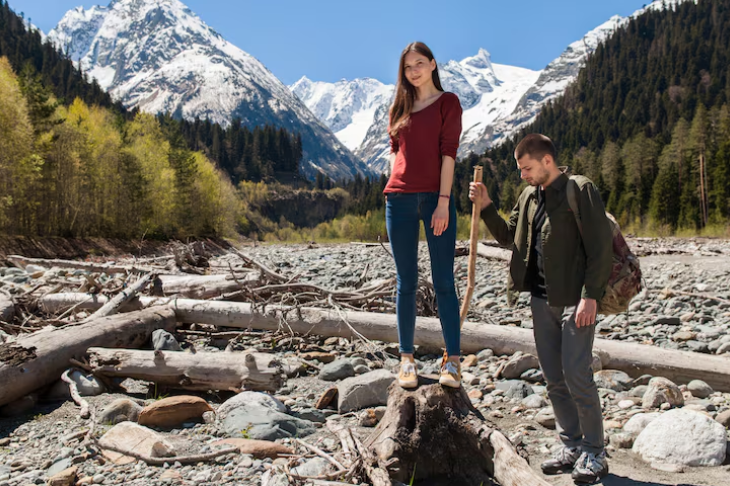

The idea is magnetic. You see the photos of the sun striking that colossal ring of peaks, and you just know you have to stand there. For a first timer, planning the Annapurna Base Camp trek is often a whirlwind of excitement. You buy gear, you train, you dream of the summit moment. But somewhere between the dream and the trailhead, a few stubborn myths about Himalayan trekking get packed along with the socks. These aren’t small errors. They shape your entire experience, turning what should be a tough but joyful journey into a genuine struggle. The gap between expectation and reality is where most first-time mistakes are born.
Altitude: It’s a Biology Test, Not a Fitness Test
This is the most serious miscalculation. A first timer looks at the peak altitude of 4,130 meters and thinks, “I’m in good shape, I’ll be fine.” They treat it like a hill, just a taller one. The reality is that altitude is a silent, physiological gatekeeper. Your cardiovascular fitness matters little to it. The thin air can humble the strongest athlete.
The standard Annapurna Base Camp trek is cleverly designed as a days long conversation with altitude, not an argument. You don’t charge upward. You climb a bit, then you rest at that height. For example, a good itinerary will have you sleep in Chhomrong at 2,170 meters, then the next day you might only ascend to 2,310 meters at Dovan. This tiny gain is intentional. It’s your body’s first day in a new, thinner atmosphere. Rushing this slow, steady ascent is the quickest route to headaches, nausea, and a ruined trip. Success here is measured in patience, not in power.
Daily Walking: It’s a Mountain Trek, Not a Country Stroll
The phrase “walking holiday” does a lot of damage. It brings to mind gentle paths and leisurely afternoons. On the Annapurna trail, you are not walking. You are trekking. The difference is in the details your travel agent’s brochure might gloss over. A standard day involves five to seven hours of what the industry politely calls “movement time.” This does not include the hour for a lunch of dal bhat, the thirty minutes spent debating a second lemon tea, or the fifteen times you stop to let a mule train pass.
The distance on paper is deceptive. That 6.7 kilometer day from Bamboo to Deurali sounds trivial. What the map doesn’t show is that it’s almost entirely uphill, a steep climb of about 920 vertical meters, often on ancient, uneven stone staircases. You will gain and lose elevation constantly, even on days you think you’re just going “up.” Your feet, knees, and lungs will be acutely aware of every single meter. Underestimating this daily physical reality is why so many people are shocked by how tired they are by 3 PM.
Mountain Weather: It’s a Local Event, Not a Regional Forecast
A classic first timer mistake is to check the weather app for Pokhara and consider the matter settled. In the mountains, the idea of a reliable “forecast” for your entire route is a fantasy. Weather in the Himalayas is hyper local. It changes by the valley, by the hour, and with the sun’s position behind a ridge.
You will likely experience multiple seasons in a single afternoon. A cold, crystal clear morning can give way to a warm, sunny climb, which can then dissolve into a cold, misty drizzle as you enter a higher valley. The sunny start at Nayapul tells you nothing about the conditions awaiting you at Machhapuchhre Base Camp. Being prepared means dressing in layers you can constantly adjust. It means your waterproof jacket and pack cover are always accessible, no matter how blue the sky looks when you leave the lodge. The mountain does not care about the forecast; it creates its own.
The Power of a Realistic Plan
Navigating these three realities altitude, terrain, and weather requires a blueprint that respects them. A thoughtfully constructed itinerary is not just a list of stops; it’s a strategic plan for success. It spaces out the ascent to outsmart altitude sickness. It breaks the long journey into daily stages with realistic hiking durations that account for the difficult ground. It should even build in a little buffer time, a recognition that weather or fatigue might dictate a slower pace.
For a clear look at how these principles are applied to create a manageable, day-by-day journey, the trekking company Glorious Himalaya provides a detailed 10-day Annapurna Base Camp trek itinerary on their website at https://www.glorioushimalaya.com/trekking-and-hiking/annapurna-base-camp-trek/ . Glorious Himalaya is a local operator based in Kathmandu, Nepal with over a decade of experience, and their itinerary shows the careful pacing and acclimatization points that define a well-planned trek.
Shifting Your Mindset for Success
So, if fitness isn’t the sole key, what is? The most important preparation happens between your ears. Embrace flexibility. The trail will have its own timetable. Cultivate patience, with the schedule and with your own body. Practice listening to what your breath and muscles are telling you more closely than you ever have before. Your gear should focus on comfort and adaptability: boots broken in over months, a layering system you can modify every hour, and a commitment to dry socks.
Trekkers who enjoy their experience are those who let go of their expectations and adapt. They embrace the journey rather than seeking to conquer the trail, respecting its rules while aiming for the finish line. The true reward lies not only in the memorable view from base camp but also in the daily accomplishments. Annapurna Base Camp shows that people can achieve greater heights than they initially believed, transforming it into more than just a dream.